

Categories
Local Guide, Buyer TipsPublished October 24, 2026
Best Commuter Towns in Fairfield County, CT

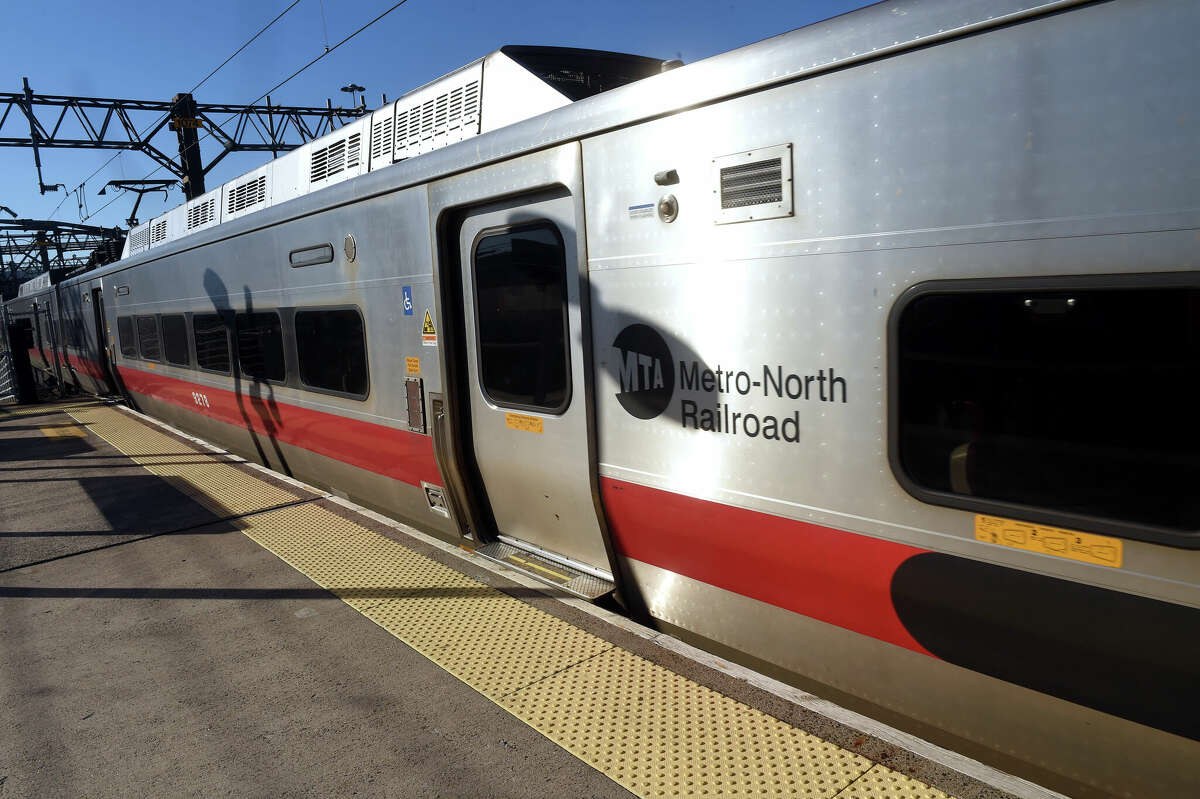
On the timetable, Greenwich is about 25 minutes closer to Grand Central than Fairfield. Door to door, the difference can be closer to 10. That gap between the schedule and the real commute is the reason I compare Fairfield County's commuter towns the way I do.
Greenwich, Stamford, Darien, Westport and Fairfield all sit on Metro-North's New Haven Line, and all five work for someone who travels into New York City. They are not interchangeable. Each town makes a different trade between the length of the ride, the price of the house and the size of the property tax bill, and the right choice depends on which of those you are actually buying.
Here is how the five compare, station by station.
Train Time Is Only Part of the Commute
Typical Metro-North travel times to Grand Central, as of September 2026:
- Greenwich: about 50–60 minutes
- Stamford: about 50–65 minutes
- Darien: about 60–70 minutes
- Westport: about 70–80 minutes
- Fairfield: about 75–90 minutes
Those ranges are where the conversation starts, not where it ends. Three things change the number that matters, which is the time between your driveway and your desk.
Which station you use. Every one of these towns except Stamford has more than one station on the main line, and they are not equal. In most towns, one station carries the full schedule and the express trains while the others are served largely by slower locals. Fairfield is the exception, with two stations, Fairfield Center and Fairfield-Black Rock, that carry a full schedule and express service.
How far you live from it. A house in Backcountry Greenwich, north of the Merritt Parkway, is at least a 15-minute drive from the Greenwich station before traffic, school buses or landscaping trucks. Add parking and the walk, and a 50-minute express becomes something closer to 75 minutes. A house near Fairfield Beach or the University area is five minutes or less by car from a surface lot, so a 75-minute express becomes about 85. The schedule suggests a 25-minute difference between the two. In practice it is about 10.
Whether you can park. Several stations in the county have multi-year waiting lists for parking permits. Before you build a commute around a particular station, confirm permit availability with the town. In Fairfield, the Parking Authority publishes availability by station.
The Five Towns, Station by Station
Median sale prices below are for single-family homes, SmartMLS, 2026 year to date through July 31. Annual tax figures are estimates for a home at that median price.
Greenwich
About 50–60 minutes · four stations · median $2.6M · about $17,700 in annual property tax
Greenwich is the closest of the five to the city and the most established. Its four stations are Greenwich, Cos Cob, Riverside and Old Greenwich. The town offers expansive properties, a downtown with real retail and the highest price point in Connecticut. Buyers who choose Greenwich usually want to be as near to Manhattan as possible without living in it.
The trade is the one described above. Backcountry Greenwich sits well north of the train, so for many buyers here the drive to the station is a real part of the commute.
Stamford
About 50–65 minutes · one main-line station · median $1.0M · about $13,600 in annual property tax
Stamford is the urban option. It is a genuine business hub with the most frequent express service in the county, and it offers apartment buildings, waterfront residences, restaurants and nightlife. For a buyer who finds leaving the city entirely to be too much, Stamford is often the compromise that works. You keep density and walkability while gaining space, and on a median-priced home, the smallest tax bill of the five.
Stamford is also the clearest illustration of how property taxes work here. It has the highest mill rate of the five towns and the lowest tax bill on a median-priced home.
Darien
About 60–70 minutes · two stations · median $3.0M · about $28,100 in annual property tax
Darien has one of the most efficient commutes in the county and a quiet, traditional residential character. Its two stations are Darien and Noroton Heights. The town has a well-loved town center, waterfront parks and a strong sense of community. Buyers who choose Darien are usually optimizing for the train and for a settled New England feel.
It is also the most expensive of the five, with the highest median price and the largest tax bill on a median-priced home.
Westport
About 70–80 minutes · two stations · median $2.4M · about $21,200 in annual property tax
Westport is the design-forward town of the group. Its two stations are Westport and Green's Farms. It pairs efficient train access with an arts scene, beaches and housing stock with real architectural interest. Westport is where buyers tend to land when they want the commute to work but do not want daily life to feel suburban in the generic sense.
For a closer look, I cover what to know before moving to Westport, and I compare Fairfield and Westport side by side.
Fairfield
About 75–90 minutes · three stations · median $1.2M · about $15,000 in annual property tax
Fairfield is the town I know best, and the most balanced of the five. Its three stations are Southport, Fairfield Center and Fairfield-Black Rock, the station formerly called Fairfield Metro. Three stations means more of the town sits within a short drive of a train, and Fairfield Center and Fairfield-Black Rock both carry the full schedule with express service. Add miles of coastline, a real downtown, two universities and housing that ranges from beach cottages to country estates.
The train ride is the longest of the five. As the example above shows, the train is not the entire commute, and in neighborhoods such as Fairfield Beach and the University area, the station is close enough to close most of the gap. My guide to living in Fairfield, CT walks through the town neighborhood by neighborhood.
What the Property Tax Bill Adds
Property taxes are where most relocating buyers are surprised, because the number that gets quoted is not the number that matters.
Connecticut assesses property at 70% of market value and applies the town's mill rate to that assessed value. A lower mill rate does not mean a lower bill. Towns with low mill rates often have very high assessed values, and the bill is the product of the two. Comparing mill rates alone tells you very little.
| Town | Median sale price | Effective rate | Tax on median home | Mill rate | Assessments dated |
|---|---|---|---|---|---|
| Darien | $3.0M | about 0.95% | about $28,100 | 16.05 | Oct 1, 2023 |
| Westport | $2.4M | about 0.88% | about $21,200 | 13.20 | Oct 1, 2025 |
| Greenwich | $2.6M | about 0.68% | about $17,700 | 10.124 | Oct 1, 2025 |
| Fairfield | $1.2M | about 1.28% | about $15,000 | 19.19 | Oct 1, 2025 |
| Stamford | $1.0M | about 1.36–1.41% | about $13,600 | 24.31–25.14 | Oct 1, 2022 |
Ranked from highest to lowest tax on a median-priced home. Median sale price: SmartMLS, single-family homes, 2026 year to date through July 31, 2026.
Greenwich has the lowest mill rate on the list and still produces a larger bill than Fairfield, because its homes are worth so much more. Stamford has the highest mill rate and the smallest bill. Darien has neither the highest nor the lowest mill rate, and the largest bill by a wide margin.
One caution on all of these figures. Mill rates are set every year, and several towns in the county are in the middle of a revaluation, so a figure you find online may already be out of date. Check the current rate with the town assessor for the specific property you are considering rather than relying on the town average. If Fairfield is on your list, I break down what the town's 2025 revaluation meant for tax bills.
Commute or House: Deciding Which One You Are Buying
Put the commute and the prices side by side and the pattern is plain. Based on 2026 single-family medians through July 31, a buyer can spend about $1.0 million in Stamford or $1.2 million in Fairfield, and $2.4 million to $3.0 million in Westport, Greenwich or Darien.
At most budgets, you cannot fully optimize for both the shortest commute and the most house. The buyers who end up happiest decide early which of the two they are optimizing for, then choose the town and the neighborhood that serve it. A shorter ride in a smaller house, or a longer ride in a house with room to grow. Both are good answers. Choosing without knowing you are choosing is the one that tends to disappoint.
Why the Right Commuter Town Matters
Choosing a commuter town is not just about the train. It is about the hours on either side of it: the morning drive to the station, the evening walk home, and the weekends when nobody is commuting at all.
The best way to learn a town is to ride its train on a weekday, at the hour you would actually travel, from the station you are considering. Then visit on a weekday morning and again on a Sunday afternoon. They feel like different places, and both versions are the one you would be living in.
Thinking about the move from the city? My relocation guide covers the commute, the tax picture, Connecticut closing costs and a realistic timeline. If the train is only one of your priorities, I also compare which Fairfield County towns suit which lifestyle, and my buyer’s guide covers what a purchase here actually costs.
If you are considering buying or selling in Fairfield County, I am here to help. With more than 15 years of experience and a deep understanding of the local market, I can provide the guidance and strategy you need to make your next move a confident one. Reach out anytime. I would love to connect.
— Shoshana Snyder, Homes by Shoshana

Shoshana Snyder
Luxury Real Estate Advisor · Compass Connecticut | Fairfield County | Shoshana Snyder, Homes by Shoshana
or another way